

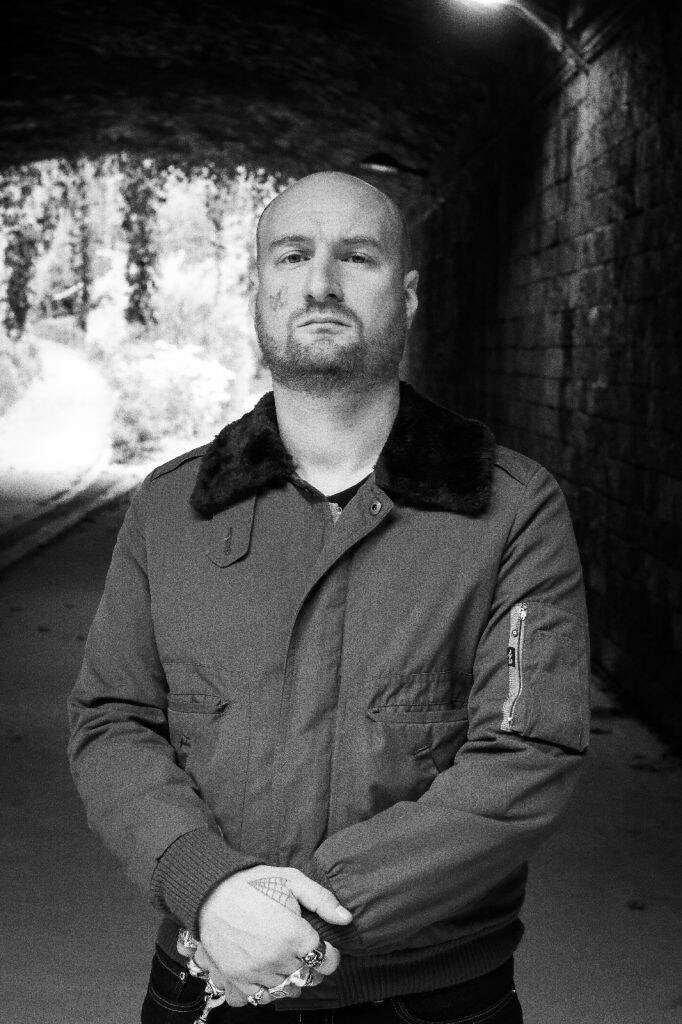
In this conversation, Wattie of the French Oi/punk band Lion's Law reflects on how he entered the scene, the band’s mix of generations, the darker edge of French punk, unforgettable shows, and the records that still matter.
How did you get involved in punk or the skinhead culture?
I got into punk thanks to my brother. He was never a punk himself, but he listened to a lot of different music. When I was 12 he gave me a few tapes—Exploited and all that shit. I shaved my head when I was 15.
The rest of the band is two different generations. Me and Daick are the younger ones. Thomas and Vovott, the drummer and the guitar player, come from the first generation of punk in France. They played in bands since around ’81. That’s a whole different story, and it’s more interesting. Mine is the classical story of a lot of people here: 12 years old discovering the music, 15 when I changed my hair.
Which bands shaped you most in the early days?
When you’re that young, the really underground French bands aren’t the first thing you hear. The true story is that I was 13 and saw that the Exploited were playing in France. I asked my big brother to take me—he was already 18 and had a car. While we were waiting for the Exploited, I saw The Business. I didn’t even know them. That changed my mindset.
You meet people and you discover more of what we call the Chaos Production sound, the French sound. French punk is divided. Most people know Bérurier Noir—that’s more the “alternatif” or alternative punk side. The real punk to me, and to a lot of people, is Camera Silens, Komintern Sect, Kidnap, Trotskids aka the Chaos Production bands.
By 16 or 17 I was all into French punk. People talk about a “cold” sound now, but I don’t really think it’s a thing. It existed forever. Putting chorus on your guitar doesn’t suddenly make you an Oi band. Paris Violence created a sound and an attitude, even if the guy was a big psychopath. French punk and Oi has always been more obscure and depressive than for instance the Spanish stuff. Listen to Camera Silens—one of the most respected bands in France—and they’re talking about overdosing and things like that. I love them. That’s why I don’t really like the “cold Oi” tag. You play punk or you play Oi. Coming into the scene in 2026 and saying “we do cold Oi, we created that”… I don’t think so.
Is there a particular show or situation you’ll never forget as a band? What’s your favourite venue or festival?
With Lion's Law, the first time we played Mexico City was insane. Very violent—don’t forget. The security was a gang member from LA who got kicked out by the government to Mexico. The promoter was also linked to gangs. You walk in and you’re like, “Wow.” The show was great, but it looked like a huge brawl. Sketchy, but a good memory. When you travel like that you realise it’s different in every country.
As for festivals, I love Beach, Beer and Chaos in Barcelona—really good people putting it on. And in Paris Le Kilowatt, because it’s the place where I set up a festival. It’s a great venue. I feel at home there. I am at home.
What are your top four all-time favourite punk albums?
It’s a difficult question. There’s Camera Silens-Réalité, L’Infanterie Sauvage-Chansons à Boire and The Business, the one with Suburban Rebels. And the Exploited, of course.
I mention those bands because they never left my life. Some bands I liked as a kid I forgot about and never talk about anymore. Others stick with you all your life. Put the Exploited on the table and everybody stands up. I’m a simple mind that way. I’m also a digger and a collector—I love obscure bands nobody’s heard of—but those aren’t the records I would put in my top four. I can sing these albums from beginning to end. That means a lot.
Reactie plaatsen
Reacties